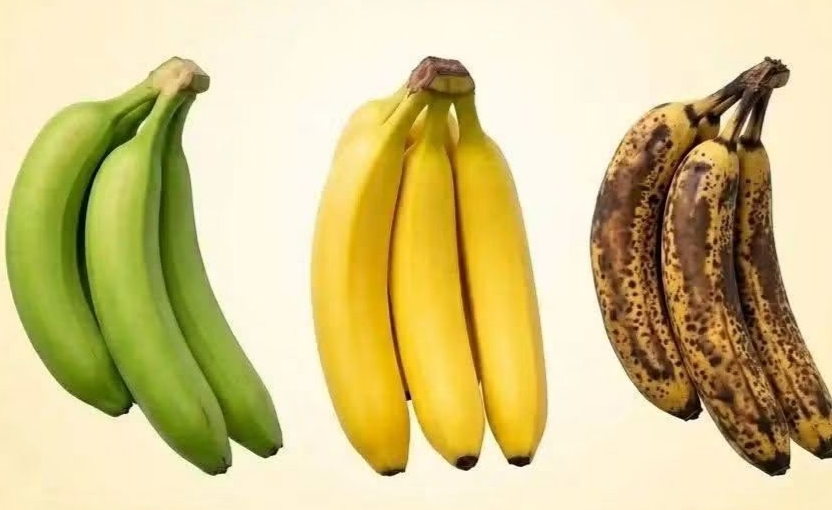
Bananas are a convenient source of carbohydrates, potassium, vitamin B6, and other nutrients, but the nutritional profile changes as a banana ripens. The color of the peel can give you a useful clue about how sweet the fruit will taste, how firm it will be, and how its carbohydrates are distributed.Green bananas are less ripe and contain more resistant starch than fully ripe bananas. Resistant starch is a type of carbohydrate that is not completely digested in the small intestine and can act somewhat like dietary fiber. Because of this, green bananas tend to be firmer, less sweet, and can be a useful option for people who prefer foods with a lower level of sweetness. They can also be more difficult to digest for some people and may cause bloating or gas if eaten in large quantities.As the banana changes from green to yellow, some of the starch is converted into simpler sugars. The fruit becomes softer, sweeter, and easier to eat. A yellow banana still provides potassium, vitamin B6, fiber, and other nutrients, making it a convenient choice for breakfast, a snack, or a pre-exercise meal.A yellow banana with a few brown spots is usually even sweeter and softer because more of its starch has been converted into sugars. It remains nutritious, and the presence of brown spots does not automatically mean that the fruit has gone bad. Many people actually prefer bananas at this stage because they have a stronger flavor and creamy texture.Very brown or heavily overripe bananas are particularly useful for cooking and baking. Their sweetness makes them excellent for banana bread, pancakes, muffins, smoothies, and oatmeal, allowing you to reduce the amount of added sugar in some recipes.So which banana is healthiest?There isn’t one universal winner. The best choice depends on what you are looking for. If you want more resistant starch and a less sweet fruit, a greener banana may suit you. If you want a convenient, balanced snack with a naturally sweet flavor, a yellow banana is an excellent choice. If you enjoy very sweet fruit or need a soft banana for baking, a ripe banana with brown spots can be ideal.For people managing blood sugar, portion size and the overall meal matter more than simply choosing a particular peel color. A ripe banana contains naturally occurring sugars, so pairing it with protein, healthy fats, or fiber—for example, plain yogurt, nuts, or seeds—can make for a more balanced snack.Bananas are also well known for their potassium content, an important mineral involved in normal muscle and nerve function. They also provide vitamin B6 and dietary fiber, although the exact nutritional composition changes somewhat with ripening.Another important point is that a banana with brown spots is not necessarily unhealthy. Brown spots are often simply a sign of ripening. However, if the fruit has visible mold, an unpleasant fermented or rotten smell, leaking liquid, or other obvious signs of spoilage, it should be discarded.Ultimately, you don’t need to avoid one color or eat only another. Green, yellow, and spotted bananas can all fit into a healthy diet. Choosing the ripeness that matches your taste, digestion, and nutritional needs is a more practical approach than searching for a single “healthiest” banana.Whether you prefer a firm green banana, a classic yellow banana, or a soft banana covered with brown spots, this simple fruit can remain a nutritious and convenient part of your everyday diet.
Which Banana Is Actually the Healthiest: Green, Yellow, or Brown?