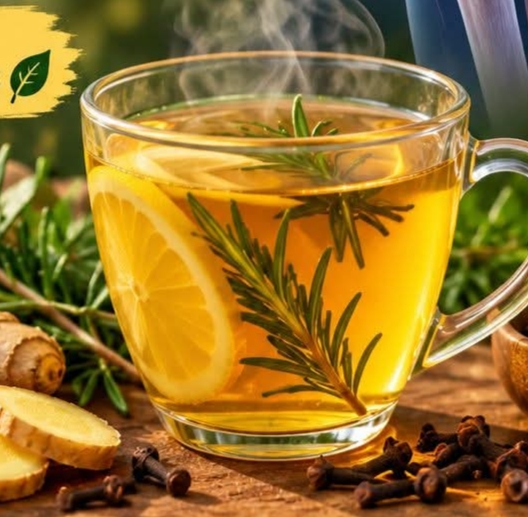
If you enjoy traditional herbal drinks, this simple tea combines fresh ginger, rosemary and cloves in one warming cup. These ingredients are commonly used in cooking and traditional wellness practices, and ginger has been studied for possible effects on symptoms associated with knee osteoarthritis. However, current evidence is not strong enough to say that ginger tea can “end” knee pain or repair damaged joints. �NCCIH +1This recipe is best viewed as a comforting beverage that can be included in a balanced lifestyle—not as a replacement for medical treatment.🛒 IngredientsFor 1–2 cups:300 ml water3–4 thin slices of fresh ginger1 small sprig of fresh rosemary, or 1 teaspoon dried rosemary3–4 whole cloves1 teaspoon honey, optional1–2 teaspoons fresh lemon juice, optionalA small pinch of cinnamon, optional👩🍳 How to Prepare the TeaPrepare the gingerWash the fresh ginger thoroughly and slice it into thin pieces. You can leave the skin on if it has been cleaned well, although peeling it gives the tea a cleaner appearance.Heat the waterPour approximately 300 ml of water into a small saucepan and bring it close to a boil.Add the herbsAdd the sliced ginger, rosemary and whole cloves to the hot water. Reduce the heat and allow everything to simmer gently for approximately 5–10 minutes.Longer steeping will produce a stronger and more spicy flavor.StrainRemove the saucepan from the heat and strain the tea into a cup. Allow it to cool slightly.Add lemon and honeyWhen the tea is comfortably warm, add fresh lemon juice and honey if desired. Stir well and enjoy immediately.🍵 When to Drink ItThis tea can be enjoyed in the morning, during the afternoon, or in the evening. Because ginger may cause heartburn, abdominal discomfort or diarrhea in some people, start with a mild preparation if you are not accustomed to it. �NCCIHThere is no need to drink large quantities. One cup is enough to enjoy the flavor and warming sensation.🌿 Why These Ingredients?Ginger: Ginger has a long history of culinary and traditional use. It has also been investigated for osteoarthritis symptoms, although the available evidence remains uncertain and some studies have limitations. �NCCIH +1Rosemary: Rosemary adds a pleasant herbal aroma and works particularly well with ginger and cloves. It can make the tea more flavorful without requiring sugar.Cloves: Cloves contain aromatic compounds such as eugenol. They are commonly used as a culinary spice, but evidence does not establish clove tea as a treatment for joint disease or chronic pain. �WebMD +1Lemon: A small amount of lemon gives the tea a fresh, bright flavor.Honey: Honey can naturally sweeten the drink and soften the strong taste of ginger and cloves.⚠️ Important Safety InformationDo not use this recipe as a substitute for treatment prescribed for arthritis, joint inflammation, injury or persistent knee pain.If your knee pain is severe, lasts for a long time, follows an injury, or is accompanied by significant swelling, redness, fever, weakness or difficulty walking, seek medical advice.Be particularly careful with concentrated herbal preparations. Clove oil, for example, is very different from using a few whole cloves in a culinary tea and can be harmful when consumed in excessive amounts. Cloves may also interact with certain medicines, including medications that affect blood clotting or blood sugar. �WebMD +1People who regularly take medication should discuss frequent use of herbal products with a doctor or pharmacist because herbs can interact with medicines. �NCCIH +1⭐ Simple Recipe Summary300 ml water + 3–4 slices ginger + 1 sprig rosemary + 3–4 cloves. Simmer 5–10 minutes, strain, then add lemon and a little honey if desired.Enjoy this aromatic drink as part of a healthy routine, while remembering that no homemade tea can guarantee to eliminate knee pain or “renew” damaged joints. 🌿☕
The Warming Ginger, Rosemary & Clove Tea for Joint Comfort 🌿