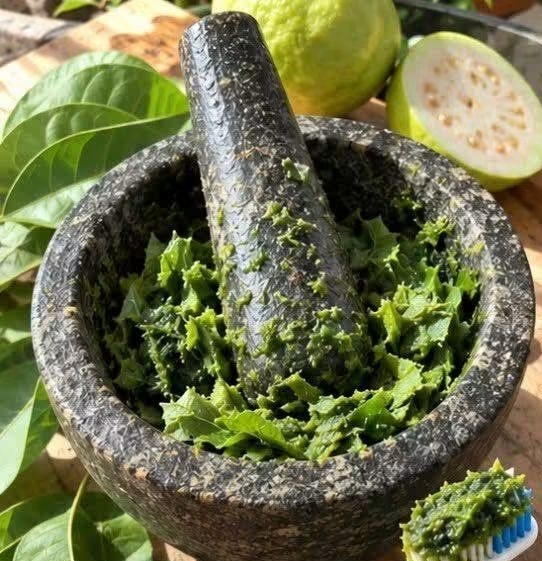
Guava leaves are traditionally used in various oral-care preparations, and they contain plant compounds that have been studied for possible antimicrobial and anti-inflammatory properties. But claims that a guava-leaf mixture can destroy tooth cavities in three minutes or eliminate the need for a filling are not supported by reliable evidence.Once a cavity has formed, especially when there is visible decay or a hole in the tooth, a homemade leaf preparation cannot rebuild the lost tooth structure.A Simple Guava Leaf RinseIf you enjoy traditional guava-leaf preparations, you can make a mild rinse for general oral freshness. It should not be considered a treatment for cavities.Ingredients5–7 fresh guava leaves2 cups of waterOptional: a small amount of fresh mint for flavorStep 1: Wash the LeavesRinse the guava leaves thoroughly under clean running water.Remove any damaged or dirty leaves.Step 2: Boil the WaterBring approximately 2 cups of water to a boil in a clean saucepan.Step 3: Add the LeavesPlace the leaves into the hot water and reduce the heat.Simmer gently for about 10 minutes.Step 4: Cool and StrainTurn off the heat and allow the liquid to cool.Strain out the leaves completely.Step 5: Use as a RinseOnce comfortably cool, use a small amount as a mouth rinse and spit it out.Do not swallow large quantities, and don’t use it as a replacement for brushing with fluoride toothpaste.What Actually Helps Prevent Cavities? The most important daily habits are much simpler:Brush Twice a DayBrush for about two minutes using fluoride toothpaste.Pay particular attention to the gumline and the surfaces of the back teeth.Clean Between Your TeethFloss or use another appropriate interdental cleaner once a day to remove plaque from areas a toothbrush cannot reach easily.Reduce Frequent Sugary SnacksRepeated exposure to sugar throughout the day gives cavity-causing bacteria more opportunities to produce acids that attack tooth enamel.Have Regular Dental ExaminationsA dentist can identify decay before it becomes severe and determine whether a filling or another treatment is necessary.Can an Existing Cavity Heal Naturally?Very early enamel changes can sometimes be remineralized with appropriate fluoride exposure and improved oral hygiene.But once decay has progressed into an actual cavity or hole, the lost tooth structure does not simply grow back.A dental professional needs to determine the appropriate treatment.What About the “Three-Minute” Claim?There is no credible evidence that guava leaves can destroy an established cavity in three minutes.The same applies to claims that a homemade mixture can make a badly damaged tooth look completely healthy immediately.The “before and after” images commonly used in social-media posts are not proof that the underlying tooth decay has been repaired.When You Should See a Dentist PromptlyDon’t delay dental care if you have:Persistent toothacheSensitivity to hot or coldPain when bitingA visible hole or dark area in a toothSwollen gumsFacial swellingPus or a bad taste around a toothA broken or severely damaged toothFacial swelling, fever, difficulty swallowing, or difficulty breathing can indicate a serious dental infection and requires urgent medical attention.Final ThoughtsGuava leaves can be used as a traditional mouth rinse, but they cannot replace a dental filling when a cavity has already damaged the tooth.The most reliable low-cost approach is regular fluoride toothpaste, daily cleaning between the teeth, limiting frequent sugar exposure, and getting dental problems treated before they become more extensive.
Guava Leaves and Cavities: What You Should Know Before Skipping the Dentist